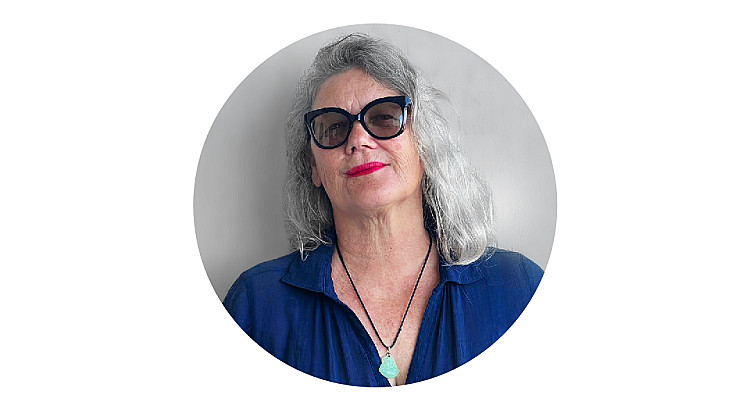
Taller Together Ep 3 | Heidi Erdmann | What We Keep
February 02, 2026
What We Keep
Heidi Erdmann on archives, images, and the work behind the work
Heidi Erdmann speaks about the art world as a set of systems rather than a cast of personalities. In this episode of Taller Together, the conversation returns to the quiet labour that determines what survives: classification, storage, description, access, and the authority of whoever writes the first record. The result is a practical guide to legacy-building that refuses glamour and still feels urgent.
Key insights:
- Research time functions as infrastructure, not a spare-hour luxury.
- Legacies often consolidate in the gap between the first sale and later resale.
- Heritage is constructed through repetition, then mistaken for inevitability.
- Museums author national identity through budgets, labels, and acquisitions. (OUP Academic)
- Photography changes when authorship expands and lived experience becomes the subject. (National Gallery of Art)
- Materials carry meaning, including paper, Perspex, and substrate.
- AI-generated images require a different cataloguing discipline than photographs. (IPTC)
- Estate planning starts as daily archive work while the artist is alive. (Society of American Archivists)
- Community programming can become a living archive.
- Choosing battles is a career skill with long-term compounding returns.
Why does research time function as infrastructure?
A practical point lands early. Research does not happen around everything else. It needs protected time, defended like any other resource. Erdmann describes switching off her phone, holding a block of hours for reading and writing, then returning to administration, meetings, and delivery.
The ordinariness matters. Knowledge production has a material condition. It relies on uninterrupted attention, predictable scheduling, and the discipline to treat thinking as work rather than a reward for finishing work.
Where do art-world legacies get built between the primary and secondary markets?
Erdmann locates much of her practice in a space the market rarely romanticises: the interval between first placement and later resale. The public eye tends to fixate on the primary market as discovery and the secondary market as validation. The middle is quieter. The middle is where future certainty gets engineered.
This is the domain of:
- provenance
- documentation
- attribution
- condition
- consistent titling and dating
- a stable account of editions, variants, and materials
When an artist’s record remains thin, scattered, or inconsistent, even strong work can struggle to compound. “Underrated” often functions as a polite description of missing infrastructure. Artsy’s glossary distinction between primary and secondary markets makes the stakes legible, even before you add the archival problem of keeping a coherent record across time. (Artsy)
Provenance itself is not trivia. It is an ownership history that anchors scholarship, value, and institutional confidence. The Getty Provenance Index exists because that history is frequently difficult to trace and still decisive. (Getty)
How does heritage get constructed, then mistaken for “natural”?
Erdmann frames heritage as something made, then treated as inevitable. That reframing changes how institutions appear. Attention shifts from what is shown to how the conditions of showing are set.
Institutional heritage is authored through:
- acquisition priorities
- cataloguing language
- wall labels and interpretive tone
- conservation budgets
- which works travel, reproduce, and get taught
- which narratives get repeated until they harden into common sense
This logic aligns with long-standing museum scholarship on power, display, and public culture. Museums do not only reflect a nation’s story. They help write it. (OUP Academic)
How do museums shape national identity through ordinary decisions?
When Erdmann speaks about national imaginaries, she is naming the limits of who gets to appear inside a nation’s self-image. The conversation stays grounded in institutional reality: collections inherited from earlier regimes, acquisition constraints, interpretive labels, and the political difficulty of re-narrating after periods of rupture.
National museums often carry an expectation of unity. Scholarship on national narratives and identity politics shows how that expectation produces tension when institutions attempt diversification, restitution, or re-interpretation. (OUP Academic)
This is why “budget” belongs in the same sentence as “identity.” Money determines what is acquired, conserved, digitised, and circulated. Labels determine what is legible. Catalogues determine what can be found. These are not neutral tools. They are story engines.
What changed in photography when women insisted on personal storytelling?
Erdmann’s attention to photography clarifies how authorship reshapes national and institutional narratives. The medium moves quickly. Shifts in who holds the camera show up fast in the archive.
Museum writing frequently describes a move away from older documentary assumptions toward more experimental, inclusive approaches. The National Gallery of Art notes how 1970s documentary practice questioned objectivity and expanded who could speak and how. (National Gallery of Art)
Two reference points help fix the change without turning it into a moral timeline:
- Jo Spence’s feminist, class-conscious practice, including self-representation and phototherapy, makes authorship explicit rather than invisible. (Tate)
- Nan Goldin’s intimate documentation of her community models a confessional vernacular that later became foundational for personal photographic storytelling. (Whitney Museum)
The point is permission. Who gets to narrate? Which forms of narration count as public history?
Why do materials matter in the reading of an image?
Erdmann’s most persuasive observations arrive through material detail. She mentions Perspex-faced photographs in museum contexts, not as a display preference, but as an argument about ontology. Surface and substrate signal how photography wants to exist in a room.
Material choices shape:
- whether the work reads as an image or an object
- how light behaves across the surface
- how conservation is approached
- how the piece is classified in a collection record
This emphasis sets up her most concrete intervention of the episode: handling AI-generated images with substrate honesty.
How should AI-generated images be handled differently from photographs?
Erdmann describes a moment of hindsight. She treated prompt-generated images as
if they were photographs in a festival context, using familiar print decisions
suited to camera-based work. Installed, the decision felt like a quiet
distortion. The display collapsed a distinction that matters to an archive, a
collection, and any future public record.
Erdmann traces the festival’s “Future Heritage” exhibition back to a
conversation with Suok-Won Yoon, a South Korean curator who is also a
practising photographer and a full-time photography professor in Seoul. Their
exchange started with a simple curatorial problem: how to frame “heritage” in a
moment when image-making is being reshaped by AI. From there, the question
sharpened into an archival one: what will today’s decisions look like when
someone returns to this record years from now?
Her proposed fix stays simple:
- show the work
- label it clearly
- choose a substrate that does not mimic photographic claims
- make the distinction material, not merely conceptual
This is not a debate about realness. It is a policy for future cataloguers.
Metadata standards are already moving in this direction. IPTC has published guidance for identifying AI-generated, synthetic media using “Digital Source Type” values, including “trainedAlgorithmicMedia.” (IPTC) The wider provenance conversation includes C2PA, which aims to preserve signed content credentials across editing and distribution, even if adoption remains uneven. (The Verge)
In other words, Erdmann’s instinct aligns with a broader
professional direction: provenance clarity needs to reside within the object,
not just in a press release.
Why is estate planning a daily habit rather than a future task?
Erdmann is blunt about the myth of later. Categories are authorship. Naming is power. Sorting is interpretation.
Archival standards formalise this reality. Descriptive practice exists to create intellectual control so that records can be found, used, and understood. Those day-to-day choices shape how a body of work will be read. (Society of American Archivists)
Her advice is deliberately unromantic:
- spend a small amount of time each day on the archive
- keep titling, dating, materials, and versions consistent
- document context while memory is still accurate
- reduce the burden that will otherwise fall on others under pressure
Legacy rarely collapses because the work was of poor quality. Legacy collapses because the record became unreadable.
How can community programming turn into an archive?
Another thread through the episode is public programming as infrastructure. Erdmann speaks about convening conversations around music photography and archives. A panel can generate more than audience development. A panel can become a seed.
Community becomes infrastructure when it produces:
- shared language for a field
- a working group that persists beyond an event
- a repository, playlist, reading list, or oral history practice
- a habit of gathering that outlasts any single institution
Archives are not only boxes. Archives are also networks that decide what gets carried forward.
What does “choose your battles” look like as a professional method?
The strongest career advice Erdmann repeats is spare and credible: choose your battles. The instruction is not about compliance. The instruction is about duration. Staying in the work long enough for it to compound.
Even her side note about a weekday uniform in good materials belongs to the same philosophy. Durable choices reduce decision fatigue. Durable choices protect attention. Over time, small material decisions become the difference between sustainability and burnout.
References
- Artsy Editors. “25 Art Market Terms Every Collector Should Know.” Artsy. (Artsy)
- Bennett, Tony. “The Exhibitionary Complex.” In Thinking About Exhibitions. Routledge. (Taylor & Francis)
- Calhoun, Craig. “The Importance of Imagined Communities and Benedict Anderson.” (calhoun.faculty.asu.edu)
- Derrida, Jacques. Archive Fever: A Freudian Impression. Translated by Eric Prenowitz. University of Chicago Press. (University of Chicago Press)
- Erdmann, Heidi. “Looking Back: The First Cape Town Photography Festival.” Heidi Erdmann (website). Accessed January 28, 2026. (Heidi Erdmann)
- Getty Research Institute. “Getty Transforms Art Provenance Data to Support 21st Century Research.” (Getty)
- IPTC. “IPTC Publishes Metadata Guidance for AI-Generated ‘Synthetic Media.’” (IPTC)
- Lleras, Cristina. “National Museums, National Narratives, and Identity Politics.” In The Oxford Handbook of Public History. Oxford University Press. (OUP Academic)
- National Gallery of Art. “12 Documentary Photographers Who Changed the Way We See the World.” (National Gallery of Art)
- Society of American Archivists. Describing Archives: A Content Standard (DACS). (Society of American Archivists)
- Whitney Museum of American Art. “Nan Goldin.” (Whitney Museum)
- Tate. “Jo Spence 1934–1992.” (Tate)
- Yoon, Suok-Won. “News.” Suok-Won Yoon (website). Accessed January 28, 2026. (suokwonyoon.com )