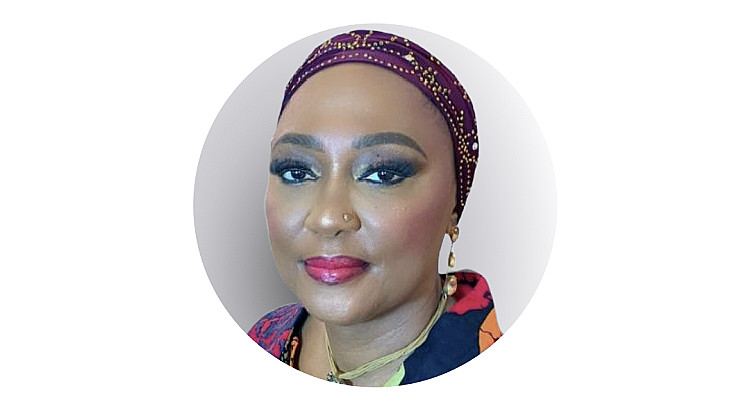
Taller Together Ep 4 | Salma Uche-Okeke | The Archive In Motion
February 09, 2026
Activating Uche Okeke’s work through structure, partnerships, and digital tools.
Key Insights to Remember
- Legacy is built, not inherited
- The archive needs legal structure
- Two entities, one public face
- Estates still have to introduce themselves
- Collecting shapes meaning
- Access is a rights question
- Technology amplifies whatever you’re already doing
- Leadership is a practice
- Partners beat lone heroics
- “Primeval Beast” holds contradiction
What Does It Mean For a Legacy to "Argue Back”?
The conversation between Tamzin Lovell and Salma Uche-Okeke keeps returning to a simple, uncomfortable fact: an artist’s work doesn’t automatically survive the artist. It survives when somebody builds the conditions for it to survive.
Salma speaks about Uche Okeke as her father and as a figure often described as the “Father of Nigerian Modernism”. But she doesn’t treat the title as a victory lap. She treats it like a responsibility with paperwork, politics, and family meetings attached.
What’s interesting here isn’t the recap of a life. It’s the afterlife: how authority gets organised once the artist can’t speak, sign, verify, or refuse.
How Does An Archive Become An Institution?
Salma is unusually specific about how the Uche Okeke Legacy is set up. She explains that, after legal consultation, they operate through two entities in line with Nigerian statutory requirements: Asele Institute GTE Limited (a company limited by guarantee) and Professor Uche Okeke Legacy Limited (the family holding company). Publicly, they present a single front; internally, those bodies do different kinds of work.
That detail matters because “legacy” is often used as a soft, flattering word. Here it’s closer to governance. A structure decides who can license images, authenticate works, negotiate with institutions, and set terms with collectors. In a market where stories travel faster than documents, structure is how you keep the work from drifting into other people’s narratives.
Why Do Estates Still Need Legal And Financial Explanation?
One of the most revealing parts of Salma’s account is how normal it still is for institutions and collectors to behave as if the artist is the only legitimate point of contact. When that habit persists after death, the estate becomes an interruption rather than a centre.
Salma frames this as a gap in recognition: the idea of the artist estate is still settling into place, and the infrastructure around it is uneven. Some artists leave extensive archives and organisational frameworks. Many don’t. Families then inherit not just the work, but the confusion.
Tamzin’s line—“collecting isn’t neutral”—lands here because it names what people often pretend isn’t there. Collecting, archiving, and exhibiting are choices with consequences. Who gets to speak for a work shapes how that work is understood.
Is Archival Care Not the Same As Freezing?
Tamzin pushes against the standard preservation language and asks about activity: what it means to keep an archive alive, rather than simply protected. Salma answers in plain terms. If it doesn’t evolve, it fizzles out.
That’s not motivational talk. It’s an art-historical point.
Uche Okeke’s modernism wasn’t a neat break from tradition. It was a method of working with local forms (including uli) in a way that kept them present, changeable, and contemporary. If you treat the legacy as a sealed cabinet, you lose the logic of the practice. Activation becomes part of care: scholarship, publishing, exhibitions, teaching, and the slow work of making the archive usable without turning it into a quarry.
Does Technology Reveal Values Rather Than Supply Them?
When the episode turns to digitisation and their partnership with Artfundi, Salma treats technology as infrastructure, not branding. She links it to a belief in cultural and technological progress, but she doesn’t imply that tech fixes anything by itself.
Tamzin puts it cleanly: technology isn’t the solution; it’s the amplifier. That sentence is doing a lot of work. A digital archive can deepen care, or it can flatten meaning. The difference lives in rights, permissions, metadata, and the terms of access. Those are the unglamorous places where ethics actually sit.
On AI, Salma stays measured: early days, still experimental. It’s a useful posture for an estate. Panic doesn’t help, and neither does pretending there are no risks. You test carefully, you keep authorship and attribution intact, and you don’t let speed set the rules.
Leadership Without Performance?
Salma describes leadership as something you keep doing, not a trait you either have or don’t. Her language is practical: they fell into the deep pool and learnt to swim while dealing with family governance and finance.
What she wishes she’d done earlier is also telling. Not “be bolder”, not “dream bigger”, but build a wider pool of experts and partners sooner. It’s the kind of advice that sounds plain until you’ve tried to build something that outlasts you.
Does the Toad Stay?
Near the end, when asked what artwork she would be, Salma chooses Uche Okeke’s Primaeval Beast. She describes the Uli lines, the “monstrous toad”, and the mix of love and loathing it brings up for her.
It’s a better closing image than any slogan. A strong legacy doesn’t sand the work down into reverence. It keeps the work strange enough to resist easy ownership. It keeps the toad.
References & Further Reading
- Museum of Modern Art (MoMA), "Uche Okeke" (artist page)
- Smarthistory, "Uche Okeke"
- Khan Academy, "Uche Okeke" (Natural Synthesis, Zaria Art Society context)
- Tate, "Nigerian Modernism" (exhibition guide)
- Routledge Encyclopedia of Modernism, "Nsukka School"
- African Arts (MIT Press), "Translational Acts: Sculpture in the Nsukka School"
- JSTOR, "Continuity and Change in Nsukka Art"
- Smithsonian Libraries (SIRIS), record referencing Asele Institute / Uche Okeke holdings
- Uche Okeke Legacy (official), home
- Artfundi (A-Mag), "Archiving the Future: Uche Okeke in the Digital Age"
- Financial Times, "Nigerian Modernism is Tate Modern's most revelatory show in years"