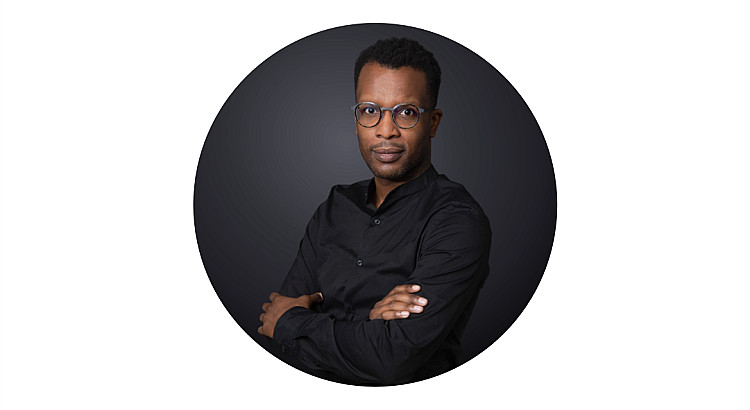
Taller Together Ep 7 | Beyond the Monument Museum | Gilbert Balinda
April 01, 2026
Beyond the Monument Museum
How cultural buildings can trade prestige signals for trust, access, and local fit.
Key insights to remember
- Trust begins at the threshold
- Monumentality can intimidate
- Inclusivity changes the brief
- Museum booms need scrutiny
- Openness starts before design
- Technology should reveal blind spots
- Gimmicks age faster than buildings
- Stored collections need visibility
- Power still shapes museum briefs
- Networks beat single monuments
In conversation with Tamzin Lovell for ARMATURE's Taller Together, Gilbert Balinda treats architecture as a public language of trust. Balinda, whose practice describes him as a Rwandan-Belgian architect and the founder and lead architect of Gilbert Balinda Architects, is less interested in spectacle than in what a building asks of its visitors: awe, caution, belonging, and distance. The conversation sits neatly beside the 2022 ICOM museum definition, which places accessibility, inclusion, ethics and community participation at the centre of museum work.
Where does trust begin?
Balinda's strongest point is also the simplest. Trust is not an abstract virtue hovering above a building. It is felt in sequence: the approach, the threshold, the door, the scale of the room, and the degree to which a visitor feels held rather than managed.
In the interview, he notes that many museum spaces still inherit an older language of authority. Monumentality, heavy doors and vast internal volumes can still signal seriousness, but they can also signal that the building belongs more to power than to people.
That distinction matters because museums do not merely store meaning. They stage a relationship between the institution and the public. Technical safety remains non-negotiable. But the more elusive question is emotional safety: does the space feel legible, welcoming and socially possible for someone who does not already know the rules? That is where architecture either extends trust or quietly withholds it.
What is the "New Museum" for?
Balinda returns several times to the gap between the museum sector's current language and the pace of its buildings. He points to the recent wave of museum openings and asks a fair question: are these projects evidence of institutional renewal, or are they still vehicles for prestige and power? Buildings take years to fund, brief, design and build. They often arrive in public long after the ideas that shaped them have begun to date.
That lag matters even more after ICOM's 2022 definition, which explicitly frames museums as accessible, inclusive, community-participatory institutions in the service of society. If that is now the agreed public description of a museum, then a great deal of inherited museum architecture looks slightly out of step. Balinda does not deny the value of those buildings. He simply refuses to pretend that a revised definition automatically produces a revised spatial culture. Systemic change, as he says, is slow.
One of his sharpest questions in the interview is this: Why should we go to the museum? It is a better starting point than many feasibility studies. It shifts the conversation away from institutional self-image and back to public purpose.
When does openness begin?
Balinda's critique is not mainly formal. It is procedural. He argues that too many museum projects are still conceived from the top down, decided in partial isolation, and only later opened to professionals and communities who are then expected to refine an already-set direction. That means openness is treated as an atmosphere or exhibition problem when it is really a governance problem. By the time architects arrive, the wheel is often already turning.
This is where the conversation becomes more pointed. Balinda names Freedom Park as an example worth reassessing: a site with a large civic and political charge, officially described as a space where South Africa's heritage and cultures can be remembered, cherished and celebrated, but one he sees as exposing the gap between declared intention and delivered experience. The point is not that ambition is bad. It is that public meaning cannot be secured by rhetoric alone. The brief, the process and the eventual use all matter.
That is also why his position on storytelling is more rigorous than it first sounds. Architecture is not storytelling because it illustrates a curatorial text. It is storytelling because it decides who gets to feel addressed, what kind of behaviour is anticipated, and whether conflicting histories can coexist without one being flattened into a neat institutional script.
What is technology actually for?
Balinda is not suspicious of technology. He is suspicious of technological vanity. In the interview, he describes the use of digital twins and simulation to test museum performance, from movement patterns to environmental behaviour. That is a serious use of technology: not decoration, not branding, but diagnostic work. It helps expose blind spots between concept and execution.
His warning comes a moment later: There's a danger to move to gimmicks. Technology that outpaces the lifespan of the building can leave institutions paying for yesterday's novelty while still struggling with climate control, energy use and maintenance. Conservation guidance from ICOM-CC and IIC makes a similar point in plainer professional language, urging institutions to reduce energy demand, consider passive methods, and avoid assuming HVAC-heavy systems as the default answer in every climate.
His example of KANAL-Centre Pompidou in Brussels pushes the argument further. Officially, it is a long-term partnership project housed in the former Citroen garage. For Balinda, it becomes a case study in fit: what happens when a powerful existing shell and a powerful institutional ambition meet, but the museum function has to be forced into place at high cost. The issue is not adaptive reuse itself. It is the assumption that any large, dramatic building can absorb any cultural brief.
What happens when collections disappear?
The most unsettling part of the conversation is Balinda's challenge to the collection model itself. He describes the museum ritual with deliberate strangeness: objects are accumulated, removed from original settings, conserved through expensive environmental control, and then only a tiny fraction is made visible. Most of the collection remains stored, while only a small percentage reaches the gallery. Trust, under those conditions, becomes entangled with invisibility.
Here, the conversation opens beyond architecture into museum ethics. ICOM's Code of Ethics treats provenance, security, resource management, returns and restitutions as core museum obligations, not side concerns. Balinda's contribution is to add a spatial and public dimension to that ethical frame. A collection may be secure and still feel remote. It may be properly held and still fail to generate public ownership. Digital access does not solve every problem, but he is persuasive on one point: safe storage should not automatically mean cultural disappearance.
Why think in networks?
Balinda's answer to future-proofing is not a smarter flagship. It is a different model. Rather than one massive institution trying to hold every function, every audience and every symbolic burden, he proposes a network of smaller, agile, connected responses. One less destination, more a set of nodes. Less centralised grandeur, more local fit.
That proposal matches the logic of the book he recommends at the end of the episode, Amin Maalouf's Les identites meurtrieres, which argues against frozen, singular identity. It also makes sense of his preference for Giacometti's Walking Man. Both references carry the same resistance to fixedness. Identity moves. Meaning layers. A cultural building should probably be able to do the same.
If one image remains after the conversation, it is not the heroic atrium or the perfect render. It is something smaller and harder to market: a building that can be re-used, re-read and re-appropriated without losing its purpose. Not one heavy door, but a set of connected thresholds. Not a frozen monument, but something closer to a walking figure, still moving.
References and further reading
- ARMATURE Magazine Podcast
- ARMATURE Events and Issue 02 Trust
- Gilbert Balinda Architects About Page
- ICOM Museum Definition
- ICOM Code of Ethics for Museums
- KANAL-Centre Pompidou
- Freedom Park Heritage Site
- ICOM-CC Environmental Guidelines
- ‘Les Identites Meurtrieres’ by Amin Maalouf
- Fondation Giacometti: Walking Man