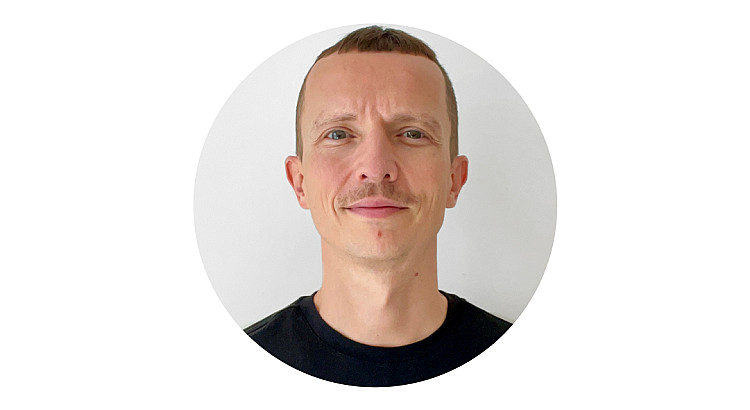
Taller Together Episode 2 | Maciej Urbanek | Building a Borderless Practice
January 26, 2026
Key insights
-
Let the work choose the medium, not the other way round.
-
Time, space, and support systems are part of the practice.
-
Bravery and clear intent matter more than perfect rules for new media.
-
Build small platforms instead of waiting for permission.
-
Biographies can cure the myth of overnight success.
Building a Borderless Practice: Lessons from Maciej Urbanek
Maciej Urbanek has a talent for stepping outside labels. In Taller Together, he speaks with Tamzin Lovell about a life shaped by movement and a practice that refuses a single format. He describes growing up between countries, including Poland, Greece, and the United States, and how that early instability trained him to adapt.
That flexibility is evident in his approach to art. Urbanek is trained in law and specialised in human rights theory tied to culture and heritage. During that time, he began studying art history and realised that art was where he wanted to put his effort. He moved to London to study at Goldsmiths, then continued at the Royal Academy of Arts.
The episode is full of details, but five themes are especially useful if you are trying to build a practice or support one.
Use the Medium that Can Keep Up
Urbanek discusses his transition to digital photography and digital printmaking, as they aligned with the pace of his thinking. At the Royal Academy, he graduated in 2010, received the school’s gold medal, and later taught there as its first photography tutor for a decade. The story matters less than the principle. Choose tools that let you work, iterate, and learn without delay.
For artists who feel stuck inside their training, this is permission to move. A medium is not a contract. It is a set of options.
Let infrastructure do some of the heavy lifting
When Lovell asks about success, Urbanek offers a definition that is grounded and direct. His friend and teacher, Eileen Cooper, told him that if you can sustain your practice, you are already successful. Sustaining means having the basic infrastructure to make work, such as time, space, and money for materials. The rest is bonus territory.
For Curators and Collectors, Bravery is Practical
Lovell raises a familiar concern: how to support experimental or abstract work while keeping audiences engaged. Urbanek pushes the conversation away from chasing fashion. He talks about bravery and about preserving integrity and honesty in the relationship between institutions, collectors, and artists. If the intent is clear, the practical questions can be solved together.
Build Platforms Instead of Waiting for Invitations
Urbanek describes opening a gallery in London. He showed his own work, but more importantly, he used the space to give other artists, including peers and students, their first exhibitions. He says it was not a commercial project. It was about creating a platform.
That is a useful model at any scale. A platform can be a pop-up, a reading group, a shared studio critique, a small publication, or a monthly online screening. The point is momentum and community.
Reset Your Relationship with Time
Urbanek recommends biographies as a way to break the spell of comparison. He names Ninth Street Women by Mary Gabriel and a biography of Cy Twombly titled Chalk: The Art and Erasure of Cy Twombly by Joshua Rivkin. Reading full lives, not highlight reels, helps artists stay at peace with their own pace.
Lovell adds a simple truth that deserves repeating. Breakthroughs take time. Careers take longer.
References
People
Places
People
Organisations and projects
- ARMATURE Magazine
- Taller Together
- Goldsmiths, University of London
- Royal Academy of Arts
- URBANEK Gallery